

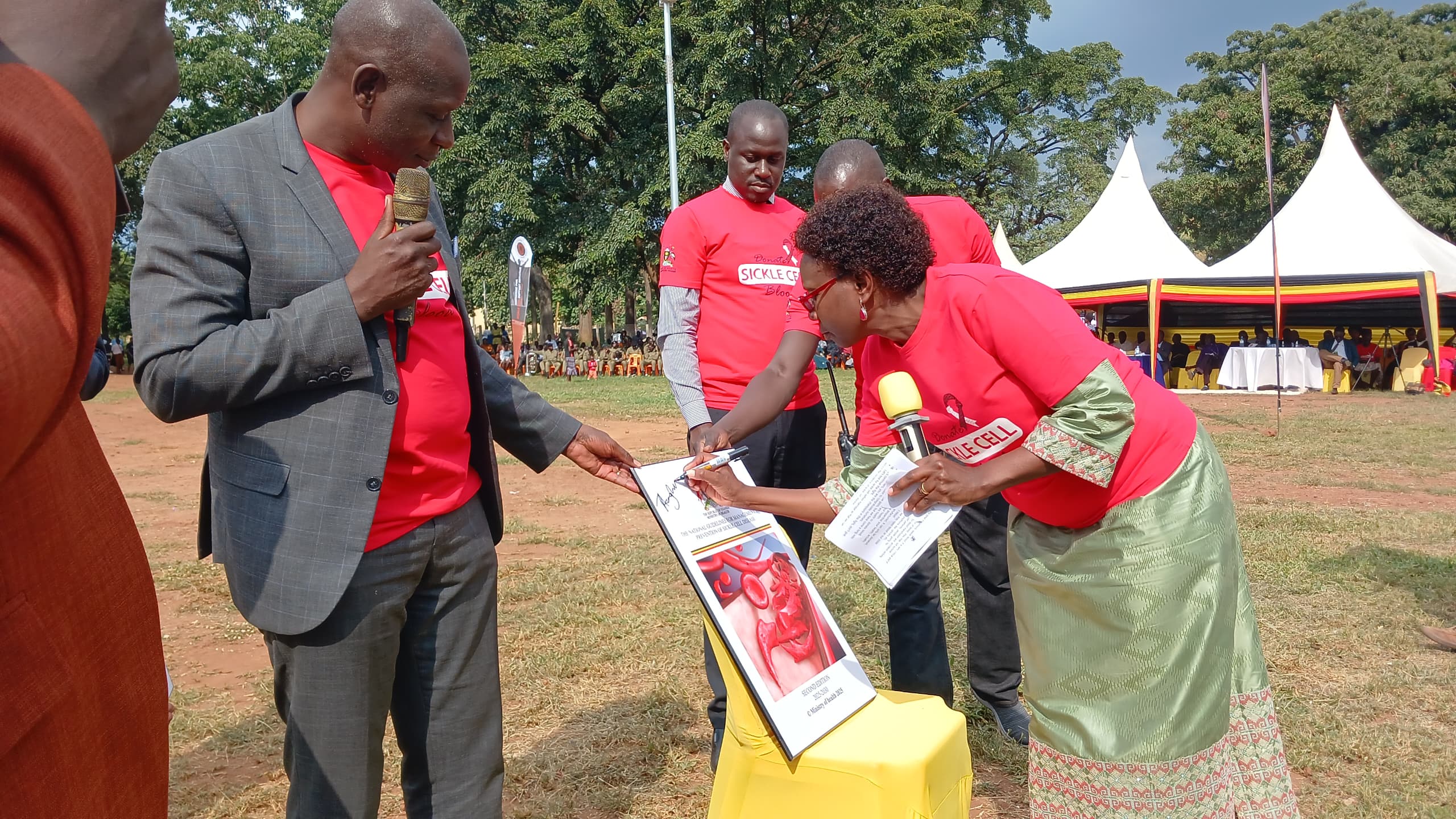
Parliament has adopted a motion urging the government to recognise sickle cell disease as a major public health concern requiring urgent budgetary attention.
The motion, moved by Asuman Basalirwa, highlighted the growing burden of the disease in Uganda, where thousands of children are born with the condition each year.
Basalirwa told Parliament that Uganda has a national sickle cell trait prevalence of 13.3 percent, meaning roughly one in seven Ugandans carries the gene responsible for the disease.
According to the legislator, an estimated 20,000 babies are born with sickle cell disease annually, while between 6,000 and 9,000 children with the condition die before reaching their fifth birthday.
“Despite government efforts to combat sickle cell disease, inadequate resource allocation and limited investment in sickle cell programmes continue to contribute to high prevalence and sustained mortality,” Basalirwa said during debate on the motion.
He urged the government to recognise sickle cell disease as a major non-communicable disease requiring urgent policy attention and increased funding to improve prevention, screening and treatment programmes.
Basalirwa described sickle cell as one of the most traumatic illnesses affecting families across the country and called for stronger public health interventions to address the burden.
Responding to the motion, Government Chief Whip Hamson Obua said the government acknowledges the seriousness of the disease and remains committed to combating it.
Obua told the House that the government, through the Ministry of Health, is implementing programmes aimed at managing and reducing the impact of sickle cell disease in the country.
“As government, we know that 13.3 percent of Ugandans carry the sickle cell trait and more than 20,000 babies are born with the disease annually,” Obua said.
He added that government officials and stakeholders should intensify public awareness about the measures already put in place to address the disease.
Uganda has one of the highest sickle cell disease burdens in the world, with the condition posing a major challenge to child survival and public health. Health experts have long called for expanded newborn screening, improved treatment access and stronger community awareness campaigns to reduce deaths associated with the genetic disorder.
The motion adopted by Parliament is expected to guide government planning and resource allocation aimed at strengthening national efforts to prevent and manage sickle cell disease.
